Choosing the right stainless steel? Yeah, it’s rarely as simple as just grabbing the cheapest grade. Global buyers have to line up chemistry, forming needs, temperature, corrosion exposure, and local standards. This guide, “Top 10 Types of Stainless Steel for Global Buyers,” looks at the practical options—from the familiar 304 and 316L to ferritic 430, precipitation-hardening grades, and duplex stainless steel.
Every grade behaves differently once it’s in the real world. 304 might be a good fit for kitchen equipment, tanks, and indoor architectural panels. 316L brings stronger resistance around saltwater, chlorides, and chemical cleaning agents. 430 can cut costs in dry indoor applications, but you need to look harder at corrosion risks. Duplex grades give you high strength, though fabrication and welding demand tighter control. So, no, there’s no universal winner.
Small details really do matter.
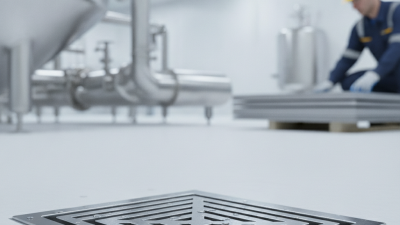
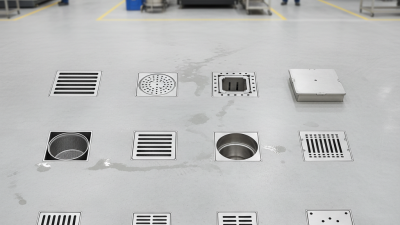
Take a Stainless Floor Drain Grate in a coastal food-processing plant. It faces totally different risks from one sitting in a hotel lobby. Buyers should check ASTM A240 or EN 10088 requirements, surface finish, thickness tolerance, weld quality, and mill test certificates. Positive material identification can also help confirm that the delivered alloy actually matches the purchase order.
This overview leans on common engineering practices and internationally recognized documentation. Still, supplier claims need verification. A polished surface doesn’t guarantee long-term performance. Even an experienced buyer can miss cleaning chemicals, stagnant water, or poor drainage design. That’s worth thinking about again.
Reliable sourcing also comes down to traceability, consistent inspection, and clear technical communication. By comparing these ten stainless steel types, procurement teams can lower replacement risks and choose materials with a lot more confidence.
Stainless Steel Basics: Composition, Properties, and Global Standards
Stainless steel begins with iron, but chromium creates its essential identity. Under EN 10088 and ISO 15510, stainless grades generally contain at least 10.5% chromium. Nickel stabilizes austenitic structures, while molybdenum improves resistance to chlorides and pitting. Carbon levels also matter, especially in welded equipment. Low-carbon grades such as 316L reduce sensitization risks after fabrication.
The ISSF Stainless Steel Statistics 2023 reported global crude stainless production of approximately 58.4 million tonnes. That scale supports a broad buying market, including 304, 316L, 430, 201, duplex 2205, and high-alloy grades. Each type balances price, strength, formability, and corrosion resistance differently. Standards matter. ASTM A240 and A480 define common sheet requirements, while EN 10088 supports European grade comparisons. Yet equivalent numbers do not always mean identical performance. Processing history can change results.
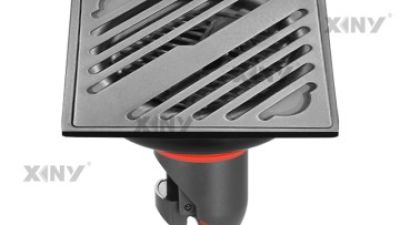
A polished 304 panel may suit indoor kitchens, while 316L is safer near seawater or de-icing salts. Duplex 2205 offers higher strength, but welding control becomes more demanding. A Stainless Steel Matte Black Floor Drain also needs separate attention. Its black surface may come from coating or chemical treatment, not stainless composition. Buyers should verify substrate grade, coating adhesion, salt-spray evidence, drainage testing, and dimensional tolerances. A darker finish is not automatically more durable. This is where many specifications become too optimistic. Always request mill certificates and independent test reports.
The Main Stainless Steel Families and Their Defining Features
Top 10 Types of Stainless Steel for Global Buyers
The Main Stainless Steel Families and Their Defining Features
Stainless steel families behave differently because their structures differ. Austenitic grades include 304, 316, 321, and 347. They resist corrosion well and remain ductile during forming. Grade 316 handles chloride exposure better, while 321 and 347 suit elevated temperatures. These grades are common in tanks, food equipment, and process piping. They are usually non-magnetic, though cold working can change that detail.
Ferritic grades 409 and 430 contain less nickel and usually cost less. They offer useful oxidation resistance but limited weld toughness in some conditions. Martensitic grades 410 and 420 can be heat treated for higher hardness. They fit blades, valves, and wear-prone components. Duplex 2205 combines austenitic and ferritic structures. It provides strong resistance to chloride stress corrosion and higher strength. Precipitation-hardening 17-4PH develops high strength after controlled aging. Heat treatment matters greatly here.
Global buyers should match the family to temperature, chemicals, forming, welding, and maintenance conditions. A low-cost 430 sheet may fail quickly near salt spray. A 316 fitting may still suffer in hot, concentrated chlorides. Small details matter. Check the material certificate, thickness tolerance, surface finish, and applicable ASTM, EN, or ISO requirements. In practice, grade names alone are not enough. Some specifications overlook weld zones or actual service temperatures. That is a weakness worth correcting before purchase. Supplier inspection, sample testing, and clear acceptance criteria reduce unpleasant surprises.
Top 10 Stainless Steel Types and Their Key Characteristics
Top 10 Types of Stainless Steel for Global Buyers
Stainless steel selection depends on corrosion, heat, strength, and fabrication needs. Grade 304 is versatile, affordable, and suitable for kitchens, tanks, and general equipment. Grade 316 contains molybdenum, offering stronger resistance to saltwater and chemical exposure. Its low-carbon version, 316L, supports cleaner welding. Grade 321 uses titanium for better high-temperature stability. Grade 347 uses niobium and performs well during repeated heating. Grade 410 is hard and wear-resistant, but its corrosion resistance is limited. Grade 430 is magnetic, economical, and useful for indoor decorative panels. Duplex 2205 combines high strength with strong chloride resistance. Grade 904L handles severe acids but costs more. Precipitation-hardening 17-4 PH provides high strength after heat treatment.
Tips: Confirm the environment before ordering. Check chloride levels, temperature, welding methods, and surface finish. For example, a Stainless Steel Floor Drain near a coastal shower may need 316L instead of 304. Ask for mill certificates and verify chemical composition through reliable inspection records.
No grade fits everything. A polished surface may look excellent but still fail in harsh service. I have seen buyers focus on price and overlook drainage water, cleaning chemicals, or weld quality. That decision can create staining and early replacement. Review actual operating conditions, then compare lifecycle cost rather than purchase price alone.
How to Compare Stainless Steel Grades for Different Applications
Comparing stainless steel grades starts with the service environment, not the lowest purchase price. Buyers should examine moisture, chlorides, acids, temperature, loading, cleaning chemicals, and fabrication methods. A coastal handrail and a food-processing tank may both look bright, yet they require different resistance levels.
The common choices include 304 and 316L for general equipment and chloride exposure. 321 and 347 suit some elevated-temperature systems because their stabilized chemistry reduces sensitization risks. 430 offers magnetic, economical performance for indoor panels and appliances. 409 fits many exhaust applications, while 410 provides useful strength and wear resistance. 420 supports harder cutting and tooling components after heat treatment. Duplex 2205 combines high strength with strong chloride resistance. 904L serves highly corrosive chemical environments, but its cost and processing demands need careful justification.
Check the full material specification.
In practice, compare chromium, nickel, molybdenum, carbon, strength, elongation, and heat-treatment requirements. Confirm the applicable ASTM or EN standard and request traceable mill certificates. For critical orders, positive material identification can verify alloy chemistry before installation. Welding also changes the decision; a grade that performs well in plate may need controlled heat input and suitable filler metal. My early comparisons focused too heavily on corrosion resistance. That was incomplete. Fabrication cost, availability, surface finish, inspection, and replacement access can change the best choice. A laboratory immersion test may not represent real splash zones, stagnant crevices, or repeated cleaning cycles. Ask suppliers for application evidence, but question broad claims. Field conditions are rarely perfect.
Choosing Stainless Steel by Corrosion Resistance, Strength, and Cost
Global buyers often compare stainless steel by price first. That can be a costly shortcut. The NACE IMPACT study estimated global corrosion costs at about US$2.5 trillion annually, or 3.4% of global GDP, using 2013 data. Grade selection deserves more attention.
For general indoor fabrication, 304 offers balanced corrosion resistance, strength, and cost. Choose 316 or 316L for coastal air, chlorides, and frequent cleaning. Its molybdenum content improves pitting resistance. Duplex 2205 provides higher strength than common austenitic grades, while super duplex 2507 suits severe chloride exposure. These grades cost more, but thinner sections may reduce total material use. For a Stainless Square Shower Drain, 316L is often safer than 304 in salty or chemically aggressive bathrooms.
Ferritic 430 is economical for dry interiors, yet it performs poorly in harsh chloride conditions. Martensitic 410 and 420 deliver hardness for wear-resistant parts, with lower corrosion resistance. Automotive applications commonly consider 409 and 439, while 904L targets highly aggressive environments. The International Stainless Steel Forum reported global stainless crude steel production of approximately 58.4 million tonnes in 2023, showing the scale of this diverse market. I still see buyers over-specify premium grades without checking exposure, cleaning chemicals, or fabrication limits. That habit deserves review. Cost follows risk.
Top 10 Types of Stainless Steel for Global Buyers — Choosing Stainless Steel by Corrosion Resistance, Strength, and Cost
Indicative comparison of commonly specified stainless steel grades. Mechanical values may vary by product form, thickness, heat treatment, and applicable standard.
Rank
Stainless Steel Grade
Metallurgical Family
Typical Corrosion Resistance
Indicative Yield Strength (MPa, minimum)
Indicative Tensile Strength (MPa, minimum)
Relative Cost Index (304 = 1.00)
Fabrication and Heat Considerations
Typical Global Applications
1
316L
Austenitic
Very high
170–205
485–515
1.25–1.55
Excellent weldability and low carbon content reduce the risk of intergranular corrosion after welding. Not immune to chloride pitting or crevice corrosion.
Pharmaceutical equipment, marine components, chemical processing, food-processing equipment, and coastal architecture.
2
2205 Duplex
Duplex stainless steel
Very high
≥ 450
≥ 620
1.35–1.75
Approximately twice the yield strength of common 300-series grades. Welding requires controlled heat input and suitable procedures to preserve phase balance.
Offshore systems, pressure vessels, desalination equipment, bridges, storage tanks, and chemical processing.
3
316
Austenitic
Very high
≥ 205
≥ 515
1.25–1.55
Molybdenum improves resistance to chlorides and many process chemicals. Good formability and weldability, but usually costs more than 304.
Marine hardware, chemical equipment, heat exchangers, medical devices, and food-processing installations.
4
304L
Austenitic
High
≥ 170
≥ 485
0.95–1.10
Low carbon improves post-weld corrosion performance. Strong general-purpose choice with excellent forming and welding characteristics.
Architectural panels, tanks, kitchen equipment, piping, general fabrication, and food-processing machinery.
5
304
Austenitic
High
≥ 205
≥ 515
1.00
Widely available and easy to form and weld. Suitable for many atmospheric environments, but less resistant than 316 in chloride-rich conditions.
Commercial kitchens, appliances, architectural trim, beverage equipment, fasteners, and general industrial use.
6
321
Austenitic, titanium-stabilized
High at elevated temperature
≥ 205
≥ 515
1.35–1.70
Titanium stabilization improves resistance to sensitization during prolonged exposure to approximately 425–900°C. Useful where thermal cycling is important.
Heat-treatable for increased hardness and strength. Corrosion resistance is lower than 304 and 316, especially in wet or chloride environments.
Valve components, pumps, fasteners, cutlery, shafts, and moderate-wear mechanical parts.
9
420
Martensitic
Moderate to low
≥ 345
≥ 655
0.80–1.05
Can achieve high hardness and wear resistance through heat treatment. Requires careful processing to balance hardness, toughness, and corrosion performance.
Very high strength and excellent resistance to pitting, crevice corrosion, and stress-corrosion cracking. Requires strict welding and heat-treatment control.
Offshore platforms, subsea equipment, desalination plants, chemical processing, seawater systems, and high-pressure piping.
Buyer note: Cost indices are indicative purchasing ranges only and vary with nickel, molybdenum, chromium, energy, freight, product form, thickness, certification, and market conditions. Always verify the required product standard and test certificates before procurement.
Global Buyer Considerations: Standards, Supply, and Quality Verification
Top 10 Types of Stainless Steel for Global Buyers
Global buyers should compare grades by application, not popularity.
Common choices include 304, 316L, 430, 201, 409, 410, 420, 2205, 904L, and 317L. ASTM A240 defines plate, sheet, and strip requirements, while EN 10088 covers European grade and delivery specifications. These systems are not identical. A “316L” label still needs its standard, heat number, and chemical limits.
58.4 million tonnes
The International Stainless Steel Forum reported global stainless crude steel production of about 58.4 million tonnes in 2023.
Supply varies by specification
That scale supports broad supply, but availability varies sharply by region, thickness, surface finish, and minimum order quantity.
For projects such as a Stainless Steel Tile Insert Floor Drain, buyers should verify corrosion resistance, welding condition, drainage geometry, and surface consistency.
A lower-cost 201 grade may suit dry interiors, while chloride exposure usually demands more careful grade selection. Cost alone misleads.
Square Stainless-Steel Shower Drains: China Supplier Insights from Grand View Research & Fortune Business Insights
Square stainless-steel Shower Drains are gaining attention in the global bathroom market as homeowners, contractors, and developers increasingly seek products that combine durability, hygiene, and modern design. Industry insights from major market research reports indicate steady demand for high-quality drainage solutions, supported by renovation activity, new residential construction, and growing interest in premium bathroom fixtures. China has become an important supply base, offering manufacturers with strong metal-processing capabilities, flexible production options, and competitive pricing for international buyers.
Our Square Shower Drain models XY625-G and 626-M are manufactured from durable stainless steel and designed for dependable daily performance. Available with a distinctive 4-inch black-gray finish or a mirror-polished surface, they can complement both contemporary and minimalist bathroom interiors. A compact filter mesh helps capture hair and debris before they enter the drainage system, reducing the risk of blockages and supporting smooth water flow. The removable drain cover also allows users to access the filter and clean the unit quickly, making routine maintenance simple for residential, hotel, and commercial bathroom projects.
Match the grade with corrosion, temperature, strength, welding, and surface requirements. Price alone misleads.
When is 304 stainless steel a practical choice?
Grade 304 suits kitchens, tanks, general equipment, and many indoor applications. It offers balanced cost and performance.
Why might 316L outperform 304 near coastal areas?
Grade 316L contains molybdenum and resists saltwater and chemicals better. It also supports cleaner welding.
Is a polished surface enough for harsh service?
No. A bright surface can still stain in chloride water or chemical exposure. Appearance is not protection.
Which stainless steel grades tolerate repeated heating?
Grade 321 uses titanium for improved high-temperature stability. Grade 347 uses niobium and handles repeated heating well.
What are the limitations of 410 and 430 stainless steel?
Grade 410 is hard and wear-resistant but has limited corrosion resistance. Grade 430 is magnetic and economical for dry interiors.
When should buyers consider duplex or high-performance grades?
Duplex 2205 combines high strength with chloride resistance. Grade 904L suits severe acids but costs more.
What documents should buyers request before shipment?
Request a mill certificate, heat number, chemical composition, dimensions, and surface details. Match markings carefully.
How can buyers verify the delivered material?
Use portable alloy screening, then inspect thickness, dimensions, welds, and surface consistency. Paperwork can still miss defects.
Why should buyers compare lifecycle cost?
A cheaper grade may stain or require early replacement. Review drainage water, cleaning chemicals, temperature, and maintenance conditions.
Conclusion
This guide introduces the fundamentals of Stainless steel, including its composition, essential properties, and the global standards used to define and evaluate different grades. It explains the main stainless steel families—such as austenitic, ferritic, martensitic, duplex, and precipitation-hardening steels—while presenting ten widely used types and their distinctive characteristics. Readers will learn how alloy content, structure, and processing influence corrosion resistance, strength, toughness, heat performance, and fabrication requirements.
The article also provides a practical framework for comparing grades in applications ranging from construction and transportation to food processing, chemical equipment, and general manufacturing. It highlights how to balance performance and cost when selecting materials, while considering operating environments, maintenance needs, availability, and lead times. For global buyers, the guide emphasizes checking applicable standards, reviewing mill documentation, confirming chemical and mechanical test results, and conducting quality verification before purchase.
Sophia is a dedicated marketing professional at Chaozhou Xinxin Technology Co., Ltd., where she plays a crucial role in promoting the company's innovative products and services. With her extensive knowledge of the technology industry, she consistently updates our company's professional blog,......