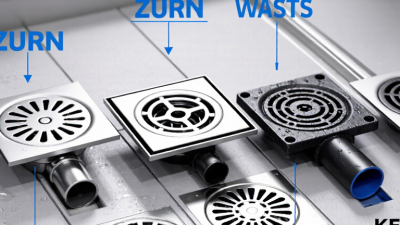
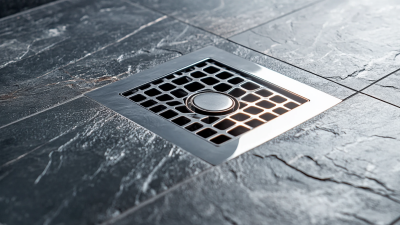
So, who are the 2026 top hidden floor drainsuppliers? Honestly, this is a big deal when you want your bathroom to look seamless, drain like a champ, and still be easy to fix if something goes wrong. The thing is, a Hidden Floor Drain should blend in with the tile—but it shouldn't disappear from your maintenance routine. The best suppliers out there? They nail it by focusing on precise engineering, solid waterproofing details, dependable manufacturing, and support that's actually responsive—like, they answer when you call. That's the kind of partner you want.
Maya Chen, who does drainage design consulting on her own, once put it like this: “A beautiful drain should pretty much vanish, but you can never afford to forget about its upkeep.” Honestly, that hits the nail on the head for a problem we see on site all the time. Sure, a 1000-millimeter channel can look all sleek and elegant, but if the slope isn't designed right, you'll end up with water pooling right next to the wall—not a pretty sight. And then there's the usual suspects: hair, soap scum, bits of grout—they'll test any hidden system, no matter how good it looks. The little things really do make or break it.
So, you're diving into Linear Drains for 2026? Cool. We've got the main players here—ACO, Infinity Drain, QuickDrain, and Watts. Each one's got its own thing going on: channel depth, how the tile insert works, grate styles, load ratings, and how you actually install them. Now, we're not just looking at specs—we're checking out material quality, how well they handle water flow, if they play nice with waterproofing, ease of cleaning, warranty clarity, and whether they'll actually show up on time. The documentation matters, sure, but so does the installer's experience. You gotta have both.
Look, no supplier nails every single project. You might see a fancy linear drain that looks amazing for a luxury hotel, but then you try to fit it into a modest home renovation and your budget just screams 'no way.' And honestly, some systems look great on paper but turn into a nightmare when you're dealing with uneven concrete floors. That's a real problem, and it's something we shouldn't gloss over with slick marketing talk. So before you pick a supplier, you really need to dig into the technical drawings, get the test data, check if they can provide replacement parts, and see if they offer local support. Because the best drain supplier isn't just the one with the flashiest website or the prettiest product shots. It's the one who's got your back when things get messy. You know that company? The one that does its job quietly, consistently, and honestly, even after the tiles are finished. Yeah, that's them.
What defines a high-quality hidden floor drain supplier in 2026? It starts with verified performance, not polished product photos. The WHO/UNICEF Joint Monitoring Programme reported that 3.5 billion people lacked safely managed sanitation in 2022. Drainage details matter. A dependable supplier should provide tested flow rates, trap-seal performance, load ratings, and corrosion results. Stainless steel should show its grade, thickness, and weld quality. Vague claims are warning signs.
Installation evidence is equally important. Look for adjustable leveling feet, clear waterproofing instructions, removable hair screens, and access for cleaning. A good drain should sit flush with the tile, not create a raised edge that catches a bare foot. Suppliers should provide dimensional drawings, batch traceability, inspection records, and responsive technical support. ISO-based quality systems help, but certificates alone prove little. Real project references are stronger.
The 2024 Global Status Report for Buildings and Construction states that buildings consume about 32% of global energy and produce 34% of global carbon emissions. This supports choosing durable components that avoid early replacement. Yet suppliers often overlook maintenance. A beautiful linear drain can still fail when its cover bends or its channel holds standing water. I would request a sample, pour water across a tiled mock-up, and inspect the seal after repeated cleaning. Small tests reveal uncomfortable truths.
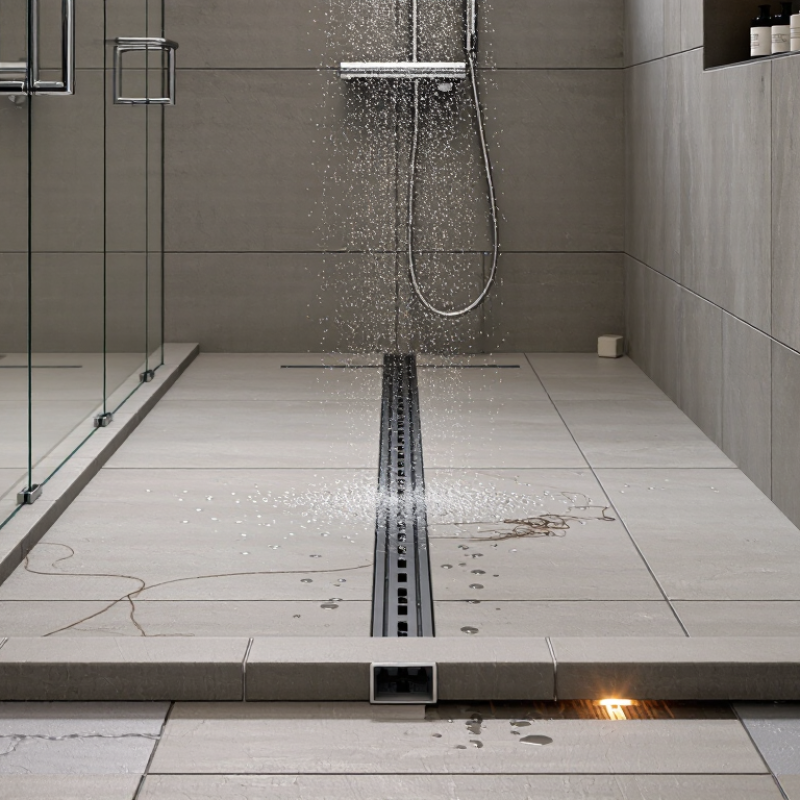
In 2026, top hidden floor drain suppliers focus on performance, not appearance alone. Modern systems use narrow linear outlets, concealed covers, and adjustable frames. These parts help maintain a nearly continuous bathroom floor surface. During site inspections, installers often check the slope with a laser level. Even a small error can leave water around the drain.
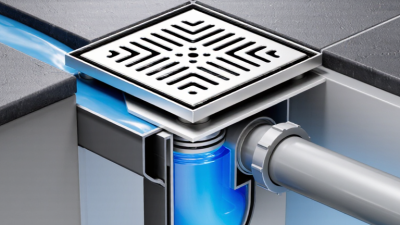
Stainless steel remains common because it resists corrosion and supports precise fabrication. Some advanced models use removable odor traps and deep water seals. These features reduce unpleasant smells during dry periods. High-capacity channels also manage water from rain showers and large-format tiles. However, drainage performance depends on more than the outlet. Waterproof membranes, tile alignment, and regular cleaning still matter.
Smart OEM Hidden Floor Drain programs can provide custom lengths, outlet positions, and cover patterns. Reliable suppliers should provide flow-rate data, material certificates, load information, and clear installation drawings. Factory testing is valuable, but field conditions can differ. That is the weak point. Dust, uneven mortar, or poor access may reduce real performance. Experienced buyers should request sample testing before placing large orders. They should also confirm spare parts and cleaning access for long-term maintenance.
Hidden floor drain systems commonly combine tile-insert or linear grates, stainless-steel channels, removable hair filters, adjustable frames, and odor-control traps. The chart compares the rated load capacities defined by EN 1253 drainage-grating classes, providing a neutral reference when evaluating suppliers for residential, commercial, and heavy-duty installations.
Reference: EN 1253 load classes for drainage gratings and covers. Actual product suitability depends on installation conditions and the supplier’s tested product configuration.
Leading hidden floor drain suppliers in 2026 are competing through performance, not appearance alone. Their strongest products combine stainless steel bodies, adjustable frames, removable traps, and precise tile inserts. On site, installers usually check drainage speed, frame stability, and cleaning access before approving a specification. A Custom Hidden Floor Drain can support seamless stone or tile layouts, but only when its load rating matches the floor structure. Small errors become visible after grouting.
The 2023 WHO/UNICEF Joint Monitoring Programme report states that 3.5 billion people still lacked safely managed sanitation in 2022. This figure keeps hygiene and reliable drainage central to commercial design. Suppliers with strong technical teams now provide flow-rate data, CAD files, installation drawings, and corrosion testing. Their product strength is easier verification. The 2024 World Green Building Trends report from Dodge Construction Network also found that 42% of surveyed firms expected most of their projects to use green practices by 2024. That trend favors durable materials and replaceable components. However, sustainability claims can be vague. Buyers should request recycled-content evidence, test standards, and maintenance records. A beautiful cover is not enough. Clearance matters.
| Supplier Profile | Primary Application | Core Product Strengths | Common Materials | Typical Outlet Options | Load Performance | Waterproofing Features | Indicative Lead Time |
|---|---|---|---|---|---|---|---|
| Profile A: Premium Linear Drain Specialist | Luxury bathrooms, wet rooms and barrier-free showers | Tile-insert covers, narrow shadow gaps, adjustable feet and concealed drainage channels | AISI 304 stainless steel; AISI 316 available for coastal or chemical-exposure areas | 50–110 mm horizontal outlets; vertical configurations available for selected layouts | Usually suitable for pedestrian and light-duty residential areas; verify project-specific classification | Factory-integrated waterproofing flange, removable hair trap and adjustable sealing collar | Approximately 2–6 weeks for standard sizes |
| Profile B: Tile-Insert Drain Manufacturer | Residential renovations and minimalist tiled interiors | Recessed tile tray, flush installation, low visual impact and easy cover removal | 304 stainless steel, stainless steel mesh and corrosion-resistant polymer components | 40–90 mm outlets, depending on channel length and trap configuration | Designed primarily for domestic foot traffic and bathroom use | Bonding flange or membrane-compatible flange; sloped channel base for drainage efficiency | Approximately 1–4 weeks for stocked dimensions |
| Profile C: Commercial Stainless Drain Fabricator | Hotels, healthcare facilities, public washrooms and commercial kitchens | Long custom channels, hygienic welded construction, removable grates and high-flow drainage | AISI 304 or AISI 316 stainless steel with welded and ground seams | 75–160 mm outlets; multiple outlet points available for long runs | Load-class options may extend from pedestrian duty to heavy commercial duty when specified | Continuous waterproofing flange, fully welded corners and removable sediment baskets | Approximately 4–10 weeks for engineered or custom assemblies |
| Profile D: Modular Hidden Drain Supplier | Multi-unit housing, apartment projects and standardized bathroom programs | Modular lengths, repeatable installation details, interchangeable covers and simplified logistics | 304 stainless steel channels with polymer traps and leveling components | 50–110 mm horizontal outlets with several trap-depth choices | Generally intended for residential and light commercial floor loading | Preformed sealing flange, height-adjustable frame and membrane-compatible accessories | Approximately 1–5 weeks, depending on quantity |
| Profile E: Heavy-Duty Concealed Drain Supplier | Garages, plant rooms, service corridors and industrial wash areas | Reinforced concealed grates, high-flow outlets, debris collection and chemical-resistant finishes | Heavy-gauge 316 stainless steel or acid-resistant stainless steel for demanding environments | 100–200 mm outlets; sump and multi-outlet layouts available | Higher load classes available; exact rating must be selected according to traffic and installation conditions | Heavy-duty flanges, fully welded joints and optional odor-control or sediment-management components | Approximately 5–12 weeks for project-specific fabrication |
| Profile F: Export-Oriented OEM Supplier | Importers, distributors, private-label programs and regional construction projects | Custom dimensions, private-label packaging, tooling flexibility and volume production | 304 stainless steel, 316 stainless steel and selected engineering polymers | 40–160 mm outlets, subject to tooling and technical specifications | Residential through commercial options; independent testing should be requested for regulated projects | Configurable flanges, seal kits, odor traps and installation accessories | Approximately 4–12 weeks, including production and export preparation |
Selection note: The profiles above are anonymized market categories rather than named companies. Actual drainage capacity, waterproofing performance, corrosion resistance, dimensions, load classification and compliance should be confirmed through current technical drawings, test reports and project-specific installation requirements.
In 2026, hidden floor drain suppliers should be compared by measurable performance, not polished catalog images. Stainless steel offers strong corrosion resistance and a clean, thin profile. Polymer bodies reduce weight and often resist household chemicals. Cast iron handles heavy loads, but installation is less forgiving. Material choice depends on traffic, water chemistry, and maintenance access.
Drainage performance needs evidence. Check flow rate, outlet diameter, trap-seal depth, grate loading, and hair-retention design. EN 1253 requires floor gullies to address flow, sealing, and accessibility requirements. The 2024 International Plumbing Code also emphasizes proper trap protection and venting.
Test the trap seal. A drain that empties quickly may still allow odors if the seal dries.
Field experience exposes the weak points. Fine debris collects beneath removable covers, especially in tiled showers. Ask suppliers for laboratory reports, dimensional drawings, corrosion tests, and replacement-part availability.
The U.S. EPA reports that household leaks waste nearly one trillion gallons of water annually, showing why small failures deserve attention.
Design options include tile-insert covers, linear channels, and removable stainless grates. Looks can mislead. I would also question marketing claims based only on peak flow, because real kitchens and bathrooms rarely drain under perfect laboratory conditions.
In 2026, reliable hidden floor drain suppliers should prove more than attractive product photos. For Wholesale Hidden Floor Drain projects, ask for current certifications, factory addresses, and traceable inspection records. ISO 9001 certification can indicate a controlled quality system, but it does not guarantee every drain performs well.
Manufacturing standards deserve closer attention. Check the stainless steel grade, sheet thickness, welding method, and surface treatment. A dependable factory should test water flow, drainage speed, load resistance, and leak prevention. Inspectors may examine weld seams under bright light, measure outlet dimensions with calibrated tools, and check grates for stable fit. Small details matter.
Factory control should include incoming material checks and batch sampling. Ask whether each shipment receives a water test and dimensional inspection. Independent laboratory reports add credibility when claims involve corrosion resistance or heavy-load performance. Certificates should show issuing bodies, dates, and matching product models. Paperwork can look convincing.
I would also review packaging before approving a supplier. Protective film, corner guards, and dry storage reduce scratches and deformation. One practical concern is often missed: site conditions can differ from factory testing. Drain performance may change with tile thickness, installation slope, or accumulated debris. Suppliers should explain these limits clearly, not hide them. A thoughtful audit may reveal inconsistent labeling or incomplete records. That is not always a failure, but it needs correction before large orders.
Choosing the right hidden floor drain supplier requires more than comparing catalog prices. A reliable Hidden Floor Drain Manufacturer should provide clear material specifications, drainage test results, and installation drawings. Stainless steel grade matters, especially in wet rooms, kitchens, and coastal buildings. Ask how the drain performs after repeated cleaning and exposure to hard water.
Review the supplier’s production experience and quality controls. Request samples before approving a large order. Check whether the grate sits level with the tile and whether the waterproofing flange fits your site method. In my project reviews, small tolerance errors often caused visible gaps and slow drainage. I once underestimated delivery timing, too. That mistake delayed several finishing tasks. A supplier’s communication process deserves the same attention as its product.
Tips: Compare warranty terms, replacement support, and lead times in writing. Ask for batch inspection records and independent test evidence. Confirm drain capacity under realistic water flow, not only laboratory conditions. Visit a factory when possible, but do not treat a polished showroom as proof of consistency. Speak with recent customers about packaging, defects, and after-sales response. Leave room for technical changes; the first specification is not always the best one.
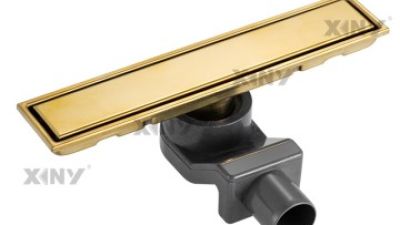
Modern 6CM linear floor drains are becoming a practical choice for bathrooms, utility areas, and other spaces where efficient drainage and clean design matter. The XY9082-6 is made from 304 stainless steel, offering strong corrosion resistance and a durable surface suited to humid environments. Its slim linear structure supports smooth water flow while creating a contemporary appearance that can complement a variety of floor styles. The 6CM profile also provides a balanced solution for projects requiring dependable drainage without an overly bulky installation.
Anti-odor performance is an important consideration in floor-drain selection. A properly designed drainage system can help reduce the return of unpleasant smells while maintaining effective water discharge and easier daily maintenance. The XY9082-6 is produced in China by an experienced supplier using advanced manufacturing techniques and controlled production processes. This makes it suitable for wholesalers, distributors, contractors, and property projects seeking consistent quality and reliable supply. With careful construction, practical functionality, and a refined stainless-steel finish, it can enhance inventory options for modern bathroom and drainage applications.
The supplier should provide flow-rate tests, trap-seal data, load ratings, and corrosion results. Vague claims are warning signs.
Check the stainless steel grade, thickness, weld quality, and material certificates. Appearance alone proves little.
Look for adjustable leveling feet, waterproofing guidance, removable hair screens, and easy cleaning access. The drain should sit flush with the tile.
Test a sample on a tiled mock-up. Pour water across the surface and inspect standing water, sealing, and flow.
Dust, uneven mortar, poor slopes, and misaligned tiles can reduce drainage. Factory results may not match real installation conditions.
Common features include narrow linear outlets, concealed covers, adjustable frames, removable odor traps, and deeper water seals.
Compare warranty terms, lead times, replacement support, inspection records, and technical communication. Cheap pricing can create expensive delays.
Recent project references, batch records, independent tests, and customer feedback provide stronger evidence. A showroom can hide inconsistency.
Ask how the cover resists bending, how the channel handles standing water, and whether spare parts remain available.
Do not approve large orders without samples. I once underestimated delivery timing, and finishing work suffered. That lesson still matters.
In 2026, a high-quality Hidden Floor Drain supplier is defined by reliable engineering, consistent manufacturing, and the ability to balance discreet appearance with strong drainage performance. Modern systems may include precision-engineered channels, adjustable components, anti-odor and anti-backflow features, removable grates, and surface finishes designed to integrate smoothly with different floor materials. Leading suppliers distinguish themselves through material durability, efficient water flow, flexible design options, and solutions suitable for residential, commercial, and hospitality projects.
When comparing suppliers, buyers should evaluate stainless steel or other corrosion-resistant materials, drainage capacity, installation flexibility, maintenance access, and compatibility with local construction requirements. Certifications, documented quality-control procedures, dimensional accuracy, leak testing, and production consistency are also important indicators of reliability. The right supplier should offer clear technical specifications, responsive project support, dependable delivery, and customization where needed. By reviewing product performance, manufacturing standards, service capabilities, and long-term value together, project owners can select a Hidden Floor Drain solution that provides lasting function, clean aesthetics, and confidence throughout installation and use.